Embodied Cosmology®
Philosophy, Method, Curriculum
Embodied Cosmology® is a learning framework that engages the 13.8-billion-year story of the Universe, Earth, and human culture through movement, relational inquiry, and group dynamics. Rather than positioning learners as passive recipients of information, Embodied Cosmology transforms learning into a lived, participatory process—inviting students to study their own direct, embodied experience of cosmological and cultural material.
Grounded in phenomenological inquiry and Systems Theory, Embodied Cosmology shifts attention from abstract knowledge about the Universe to experiential knowing from within it. Through embodied exploration, learners become conscious participants in meaning-making that integrates scientific understanding with first-person, embodied experience, treating felt sense and lived perception as legitimate forms of data.
This approach supports participants in orienting to their place in the Universe, embodying personal and collective intelligence, and allowing their personal creative map to emerge.
Embodied Cosmology® is my original framework for teaching the 13.8-billion-year story of the Universe through phenomenology, movement practice, and cosmological science.
— Rebecca-Sophia Strong, Creator of Embodied Cosmology®
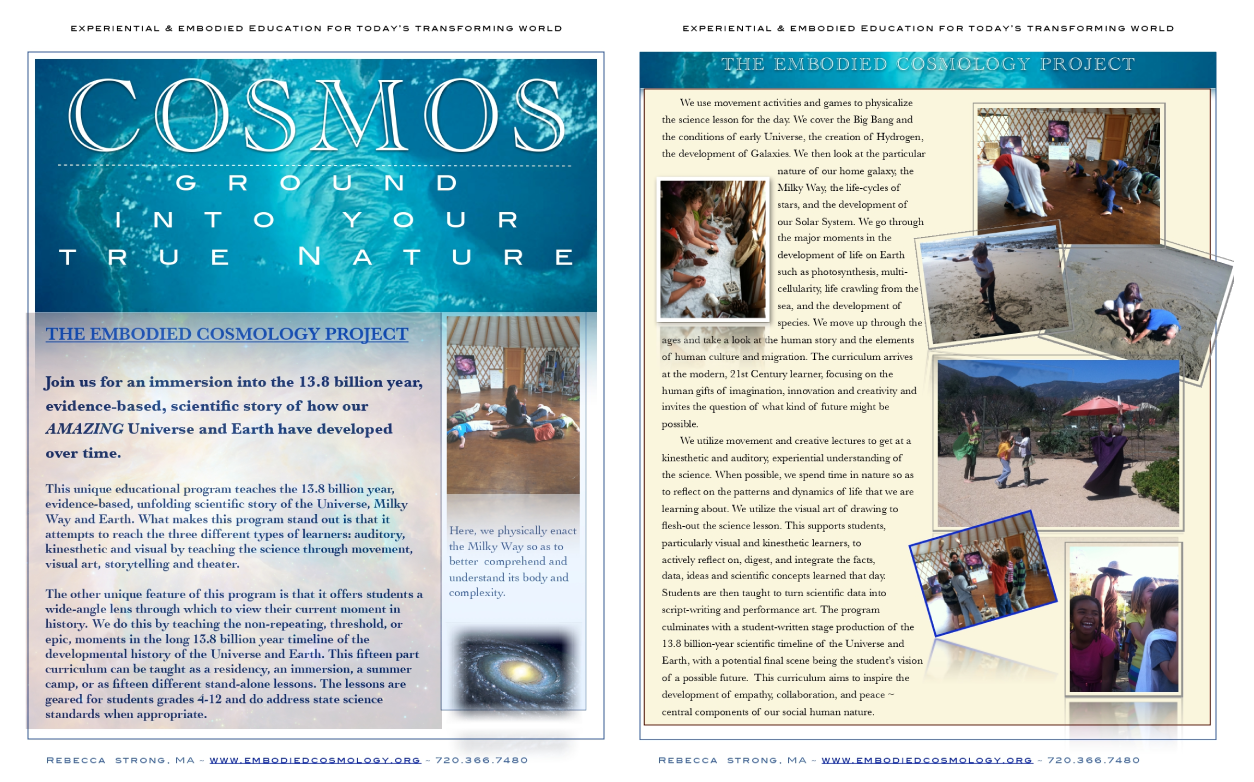
Teaching my Embodied Cosmology® Children’s Curriculum at our 5 and 10-day Cosmology Camp in Ojai, CA 2011 and 2012
.
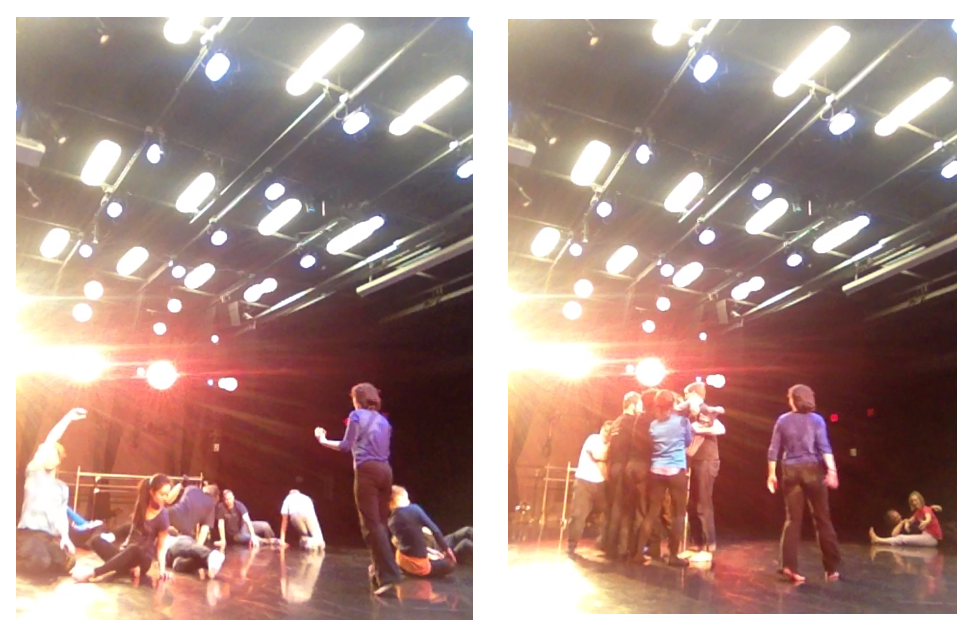
Next up: Co-teaching my Embodied Cosmology® curriculum in the Astronomy Department at the University of Colorado Boulder January - June 2026. These pictures were from facilitating my Embodied Cosmology® Adult Curriculum on Photosynthesis with the Bodystormer Lab at the University of Minneapolis Minnesota, 2014.
Our 13.8 Billion-Year (Somatic) Intelligence
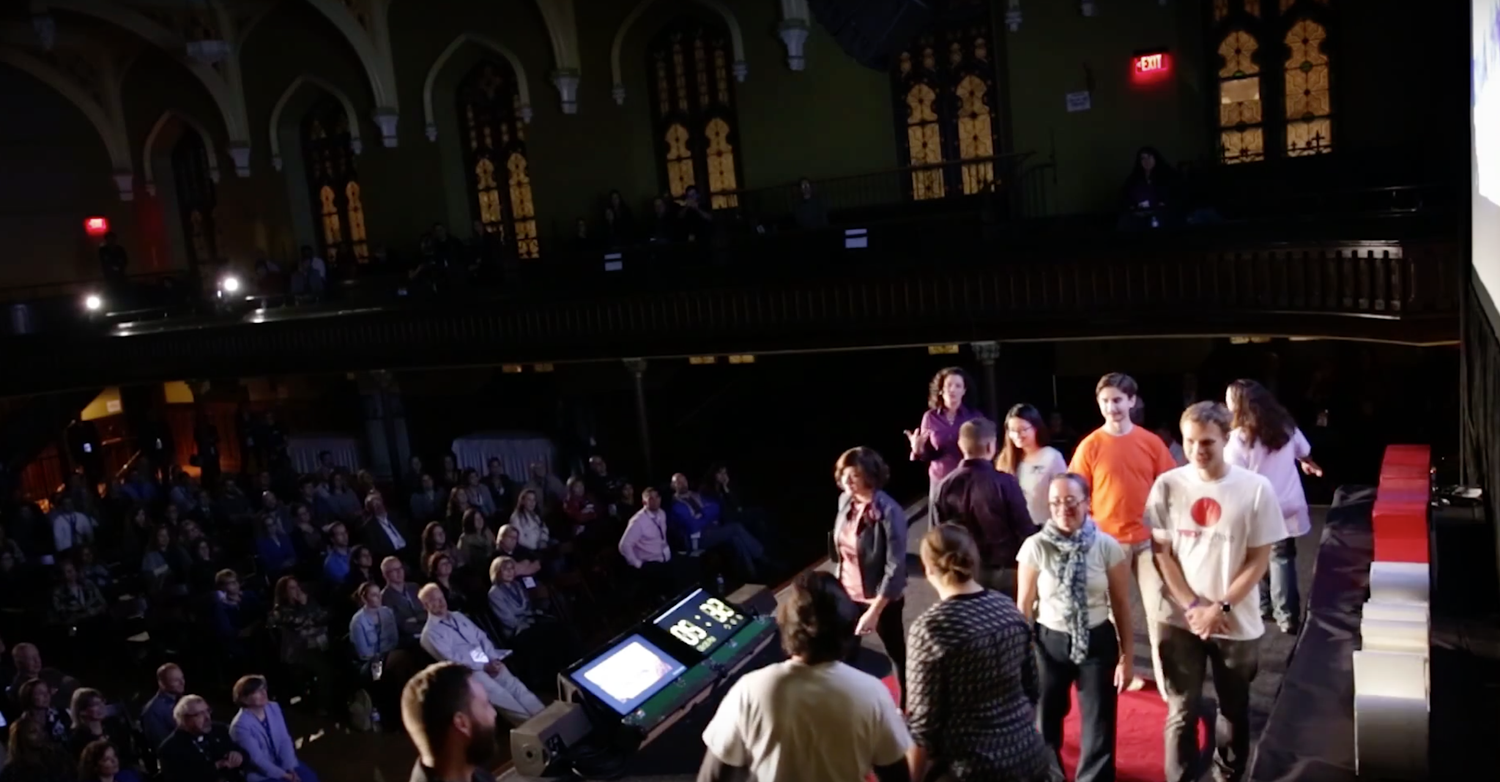
The idea I was presenting were actually two: What happens when we learn science through movement? And; What Social Technologies can we learn from the Ancient Sea?; A study of Photosynthesis and Multicellularity. TEDxTalk illuminates a demonstration of my Embodied Cosmology® curriculum. 2015.
All of these key characteristics of Embodied Cosmology® are included in my curriculum:

Active Learning:
Encouraging students to take an active role in their learning through collaborative projects, discussions, hands-on activities, and real-world problem-solving.

Interdisciplinary Approaches:
Blending different subject areas to allow students to make connections between diverse fields of knowledge.

Critical Thinking:
Fostering an environment where students are encouraged to question, challenge, and think deeply about topics rather than simply absorbing information.

Student-Centered Learning:
Focusing on the interests, strengths, and individual needs of students, with the goal of making learning more relevant and engaging for them.

Use of Technology and Multimedia:
Incorporating new media, digital tools, and interactive resources that facilitate creative expression and learning.

Playfulness and Experimentation:
Creating a safe space for trial and error, where students can experiment with new ideas and approaches without the fear of failure.

Reflective Practices:
Encouraging both students and teachers to reflect on their learning processes and outcomes, fostering a mindset of continuous improvement.